
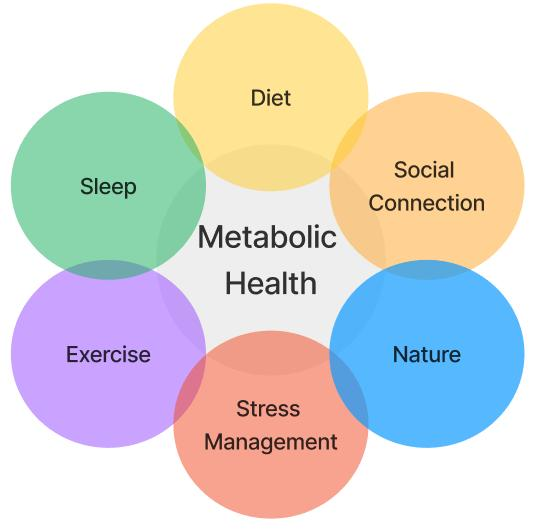
Metabolism is often discussed as though it were a single switch that determines whether someone easily loses or gains weight. In reality, the way the body uses energy is influenced by a complicated network of biological and lifestyle factors. Food intake matters, but so do physical activity, muscle mass, sleep, stress, age, body size, and individual physiology.
This complexity helps explain why sustainable weight management rarely comes down to one food, workout, or supplement. Looking at metabolism as part of a larger system provides a more realistic framework for understanding body composition and making healthier long-term decisions.
Rather than searching for one factor to control, it can be more useful to consider how nutrition, movement, recovery, and emotional wellbeing interact.
Nutrition Provides the Energy Equation
Food provides the energy required to keep the body functioning, from basic cellular processes to everyday movement and structured exercise. When energy intake consistently exceeds expenditure, the excess can contribute to weight gain. When intake remains below expenditure over time, stored energy can be used.
Yet reducing nutrition to calories alone overlooks food quality and dietary sustainability.
Protein supports the maintenance and repair of body tissues and becomes particularly relevant for people combining a calorie deficit with resistance training. Carbohydrates provide an important source of energy, particularly for physical activity, while dietary fats perform numerous physiological functions. Fruits, vegetables, whole grains, and other nutrient-dense foods also provide vitamins, minerals, and fibre.
Spiritus Wellness takes a similarly interconnected approach in its discussion of daily wellness habits, bringing nutrition together with exercise, sleep, and stress management rather than treating any one habit as the entire solution.
For weight management, the most useful eating pattern is generally one that supports nutritional needs while being realistic enough to maintain.
Movement Influences More Than Workout Calories

Exercise is commonly associated with the calories burned during a gym session, but movement affects the energy equation in several ways.
Structured cardiovascular exercise can increase energy expenditure and support cardiovascular fitness. Resistance training provides a different benefit by helping develop or maintain muscle and physical strength. Everyday activity also contributes to total energy expenditure through walking, household activities, commuting, standing, and countless small movements throughout the day.
This makes consistency more important than trying to make every workout as exhausting as possible.
Someone who completes several demanding workouts but spends the remainder of the week largely inactive may have a very different activity profile from someone who combines structured training with regular everyday movement.
Exercise should therefore be viewed as part of a broader active lifestyle rather than simply a tool for cancelling out calories consumed.
Supplements Have a Supporting, Not Leading, Role
The complexity of metabolism has created a large market for products positioned around energy expenditure, weight management, and body composition. Supplements may form part of some people’s routines, but expectations about what they can accomplish should remain realistic.
Someone considering sealions fat metaboliser, for example, should examine the ingredients, intended use, serving information, and suitability of the product while viewing it within the context of their overall lifestyle.
No supplement can replace the fundamental relationship between nutrition and energy balance. Nor can it reproduce the broader benefits of regular physical activity, adequate sleep, or effective recovery.
Some formulations may also contain caffeine or other ingredients that are unsuitable for particular individuals. People taking medications, managing health conditions, or uncertain about supplement ingredients should seek appropriate professional guidance.
A supplement is best understood as exactly that: something supplementary to an established routine rather than the foundation on which the routine depends.
Sleep Connects Recovery With Metabolic Health

Sleep is sometimes treated as optional when people design a weight-management routine. Diet and exercise receive most of the attention, while sleep is expected to fit around everything else.
That can overlook an important part of the wellness picture.
Adequate sleep supports physical recovery and influences energy, mood, concentration, and the ability to train consistently. Poor sleep can make a demanding exercise programme feel considerably harder and may also make it more difficult to maintain planned eating habits.
Sleep becomes particularly relevant when supplements containing stimulants are involved. Taking stimulating ingredients too late in the day can interfere with rest for some people. In such circumstances, using a product intended to support one part of a fitness routine could potentially make another part more difficult.
This illustrates why metabolic wellness is better considered as a connected system. Decisions about training, nutrition, supplements, and recovery do not occur independently of one another.
Stress Can Change the Way Healthy Habits Feel
Stress does not magically override energy balance, but it can influence many of the behaviours surrounding it.
Periods of prolonged stress can disrupt sleep, reduce motivation to exercise, affect food choices, and make established routines more difficult to maintain. Someone who is exhausted and overwhelmed may find meal preparation or structured training considerably harder than when life is relatively stable.
This is why stress management deserves a place alongside nutrition and physical activity. Spiritus Wellness’s discussion of strategies for managing stress connects techniques such as mindfulness and relaxation with broader lifestyle practices including sleep hygiene and balanced nutrition.
Stress reduction does not require eliminating every demanding situation. That would be unrealistic. Instead, practices such as regular movement, relaxation, maintaining social connections, and establishing consistent sleep routines can contribute to a more manageable overall lifestyle.
These habits can indirectly make nutrition and exercise easier to maintain, which is particularly important when the objective requires consistency over months rather than days.
Solving the Metabolism Puzzle Means Looking at the Whole Picture
Metabolism is not a puzzle that can be solved by discovering one hidden trick. It is a collection of processes operating continuously while responding to both biology and behaviour.
Nutrition determines the energy and nutrients entering the body. Movement contributes to energy expenditure and physical fitness. Resistance training can help maintain muscle. Sleep supports recovery and everyday functioning, while stress can influence the behaviours that determine whether a healthy routine remains sustainable.
Products such as sealions fat metaboliser may be considered within that larger framework, but they should not displace the fundamentals that have a much broader role in health and body composition.
This whole-picture approach may be less exciting than promises of rapid transformation, but it offers something more useful: a framework that can be adapted to real life.
When nutrition, movement, sleep, and stress management support rather than undermine one another, weight management becomes part of a broader approach to wellness. The objective is no longer simply to make metabolism “faster.” It is to create an environment in which the body’s energy needs, physical activity, recovery, and everyday habits can work together more effectively.